Garage Door Off Track Repair in Faribault, MN
The door is braced, coaxed back into the track and re-hung on straight rails with healthy rollers, and the cause of the derailment is dealt with so it won't repeat.
Rollers popped out, a door tilted or wedged, a panel bowed where it caught: any of these on a garage door near Faribault means it is off track. Don't use it, and keep the opener switched off until someone has looked at it.
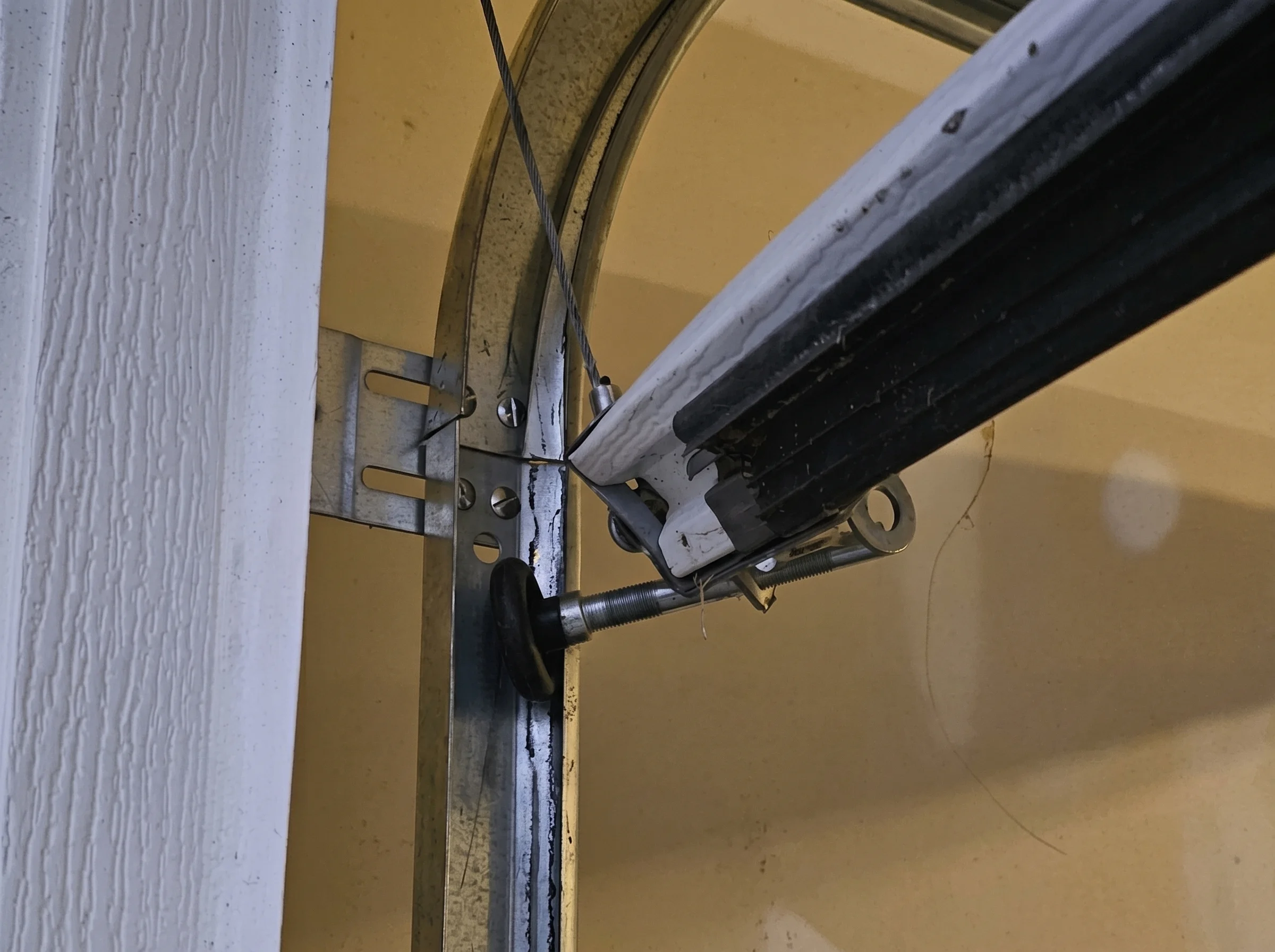
How to tell a door has derailed
One or more wheels riding outside the rail, typically near the base of the door or at the spot where the track bends up toward the ceiling.
The door canted or jammed, often halfway up.
A panel creased or bowed that the opener crushed while pushing a jammed door.
Bent or dented track, or a rail pulled away from the wall.
Scraping, popping or grinding noises shortly before the door jumped out.
Door out of its track? Keep the opener idle and describe which side came out and how.
Contact UsWhat knocks a door off track
A car strike
Backing into a shut or half-raised door is the classic cause, and the bottom stretch of track often bends too.
A cable that let go
When a cable lets go, a corner drops and rollers spring free. The cable repair page deals with that side of things.
Rollers past their life
When a bearing fails the roller drags rather than spins, then leaps out at the first rough patch.
Track that has shifted
Years of vibration loosen the brackets holding track to the wall, and the rails gradually spread until a roller escapes.
An object under the door
A bike or mower caught under a closing door, worse with force set high; federal rules test reversal on 1-inch objects.
First steps
Leave the opener off
It will keep driving the door, bending panels or ripping track off the wall.
Skip the emergency release while the door is partway up and off track, because the door may drop or swing free of the rails entirely.
Hammering rollers back into place is unwise while the door is loaded: it still carries spring tension and may lurch suddenly, so leave it to a pro.
Stay clear of the door, and if a car is trapped inside, mention it first when you call.
How the fix goes
First the door is propped and held against falling or shifting, and spring tension is dealt with safely before any part comes loose.
Damage gets sized up
The rollers involved, the length of track affected, any bent sections, and whether a cable or spring set it off.
Track trued up or swapped out
A slight bend can be worked straight; a kinked section is swapped.
Damaged rollers are removed, and each hinge is inspected, because a cracked one will throw the next roller out too.
The door goes back into the track, the brackets get tightened, and the door runs through full cycles on the opener, with force and travel checked once more.
Describe the situation
A short note is enough to begin with, and you don't have to name whichever part has failed.
Rollers
Quiet, even travel depends on the rollers, and they tire out well ahead of the panels they carry, which outlast them.
Bearing-free steel rollers are the entry-level type. They clatter and grind down the track as well as themselves.
Sealed-bearing nylon rollers glide almost silently and ask for hardly any lubrication.
A roller that wobbles, has flat spots or a cracked wheel is due for replacing.
A door that's loud rather than broken often just needs new rollers, and that swap is commonly done during an ordinary maintenance visit.
What shapes the cost of getting back on track
Extent of the derailment
A pair of rollers loose at one corner, or the whole door dangling.
Track condition
Trueing the rails versus new sections, one side or both.
Worn rollers and hinges to replace.
Door panels that are bent or cracked
A badly bowed section may need replacing, which can mean matching the panel on an older door.
A cable or spring that failed first and set it off.
When a panel can't be rescued
A hard hit can leave sections too bent to straighten. One section can often be swapped if a match is made. Verify a provider's license through the Minnesota Department of Labor and Industry.
If it isn't, or several sections are hurt, compare the replacement choices under garage door installation.
Quick answers
May I seat the rollers back in the track by hand?
Only if one roller popped out at the bottom of a closed door, the track isn't bent and no cable is loose, and even then sometimes. Beyond that, stop: the heavy door sits under spring tension and can shift unexpectedly.
Why does one side keep jumping out of the track?
Typically a track bent a little out of line, a loose bracket, or an out-of-adjustment cable on that side. Re-hanging the door without fixing the cause just invites a repeat, probably within weeks.
Do tracks need lubricant?
No. Keep tracks clean and dry; oil on them traps grit and dust. Bearings, hinges and springs are what get lubricant, applied sparingly.
Other services on offer
Garage Door Cable Repair
Cables that have frayed, snapped or slipped, and crooked doors.
Read more →Garage Door Spring Repair
Torsion or extension springs that failed, swapped for ones that fit your door's weight.
Read more →Garage Door Installation
New steel, wood, composite or glass doors, ordered for your opening's measurements.
Read more →Send the details
Tell us where the door sits (closed, open or partway), which side came out, whether anything struck it, and whether a cable looks slack. Mention ice: Faribault's January lows average near 5 degrees F.
A photo of each side helps.