If you are asking how to bypass garage door sensor, the safest answer is not to bypass it. The sensors help stop a closing door when something is in its path. In Faribault, first clear the area and check the sensor lenses. If the door still will not close, stop and arrange a safe inspection.
Table of Contents
- What do garage door safety sensors do?
- Why is bypassing a garage door sensor dangerous?
- What do the garage door sensor lights mean?
- How can you clean and realign garage door sensors safely?
- What else can stop a garage door from closing?
- When should you stop troubleshooting and call a garage door technician?
- What should you remember when a garage door sensor fails?
What do garage door safety sensors do?
Garage door safety sensors help stop a door from closing when something blocks its path. They are small devices placed near the floor, on both sides of the opening. One sends a beam of light to the other. When an object blocks the beam, the opener should stop or reverse the door.
This setup is called a photo-eye. A photo-eye uses a light beam to check whether the space below the door is clear. You may not see the beam, but small lights on the sensors can show whether they are lined up. Light colors and patterns can vary by opener model, so the manual is the best guide.
Sensors help protect people, pets, and property. A child, pet, bike, or storage bin might be in the door’s path when the driver cannot see it. A working sensor can help stop the door from closing onto that item. It is a key part of garage door safety, not just a reason the opener may refuse to work.
In Faribault, a door may start to close and then move back up. It may also refuse to close at all. A blocked beam or a sensor that has shifted out of line can cause these signs. But other parts of the door system can cause similar trouble, so the symptom alone cannot confirm a sensor fault.
Faribault Garage Door Repair can help explain what may be stopping the door and which checks are safe. Leave the sensors in place so they can protect the door opening. Do not cover, unplug, or try to fool a sensor just to close the door.
Why is bypassing a garage door sensor dangerous?
Bypassing a garage door sensor is dangerous because it removes a check that can stop a moving door. Without that check, the door may keep coming down when a person, pet, or object is below it. It may also damage property or make an existing fault harder to spot.
A door that closes after the sensors are bypassed is not proof that it is safe. It may only mean that the opener no longer gets the signal to stop. The first problem can still be there. The door may also have a fault with its tracks, springs, cables, or opener.
Garage doors are heavy, and their moving parts can cause serious harm. Springs and lift cables hold strong tension. They help raise and lower the door, but a damaged part can move without warning. The sensors and these parts do different jobs. Making the sensors inactive will not fix a mechanical problem.
Some people search for how to bypass garage door sensor because they need to move a car or secure a building. That concern makes sense, but defeating the safety feature can make things worse. If the door is stuck open, keep people away from the opening. Do not stand under a door that looks crooked or unstable.
The safer choice is to look for something blocking the beam or ask a technician to inspect the system. Never tape over a sensor, cut its wires, or use a trick to force the door down. A proper repair should make the door safe again, not hide a warning.
What do the garage door sensor lights mean?
Sensor lights can give useful clues, but what they mean depends on the opener. A steady light may show that a sensor has power or can see the other sensor. A blinking or dark light may mean the beam is blocked, the sensors are out of line, a wire is loose, or a part has failed. Check the opener manual for the light pattern used by your model.
Check the lights without touching wiring
Look at both sensor lights from a safe spot. Check that no item is between the sensors. A bin, broom, or pile of leaves can block the beam. If a light is off or blinking, note which one and whether the other stays steady. That detail can help when you explain the problem.
Do not pull wires or open the opener to check a light. If you see damaged wires or bare metal, or smell something burning, stop checking. Different brands may use different light colors and blink patterns. A pattern you find online may not match your opener.
A sensor light can look normal even when another part has a problem. The opener might stop because of a setting, a door that sticks in its track, or a mechanical fault. Treat the lights as clues, not a full answer. If the door still reverses after you clear the sensor area, the cause may be elsewhere.
Faribault Garage Door Repair can help tell a sensor warning from a wider garage door problem. The opener manual may explain its indicator lights. If the manual is missing, look for guidance from the maker using the opener’s model number.
A normal-looking light does not prove that every part is safe. If the door shakes, hangs crooked, makes a harsh sound, or stops partway, leave it alone and arrange an inspection. In Faribault, avoid repeated attempts to close a door that is acting in a new or unsafe way.
How can you clean and realign garage door sensors safely?
You can safely clear objects and gently clean the sensor lenses. You can also look to see whether a sensor appears to have been knocked out of line. These simple checks do not require touching springs, cables, brackets, or wires. Keep your hands and tools away from the moving door while you check.
Clear the path and clean the lenses
- Make sure the door has stopped. Keep children and pets away from the opening.
- Move objects and loose dirt from between the sensors. Do not shift a heavy item if it might make the door move or fall.
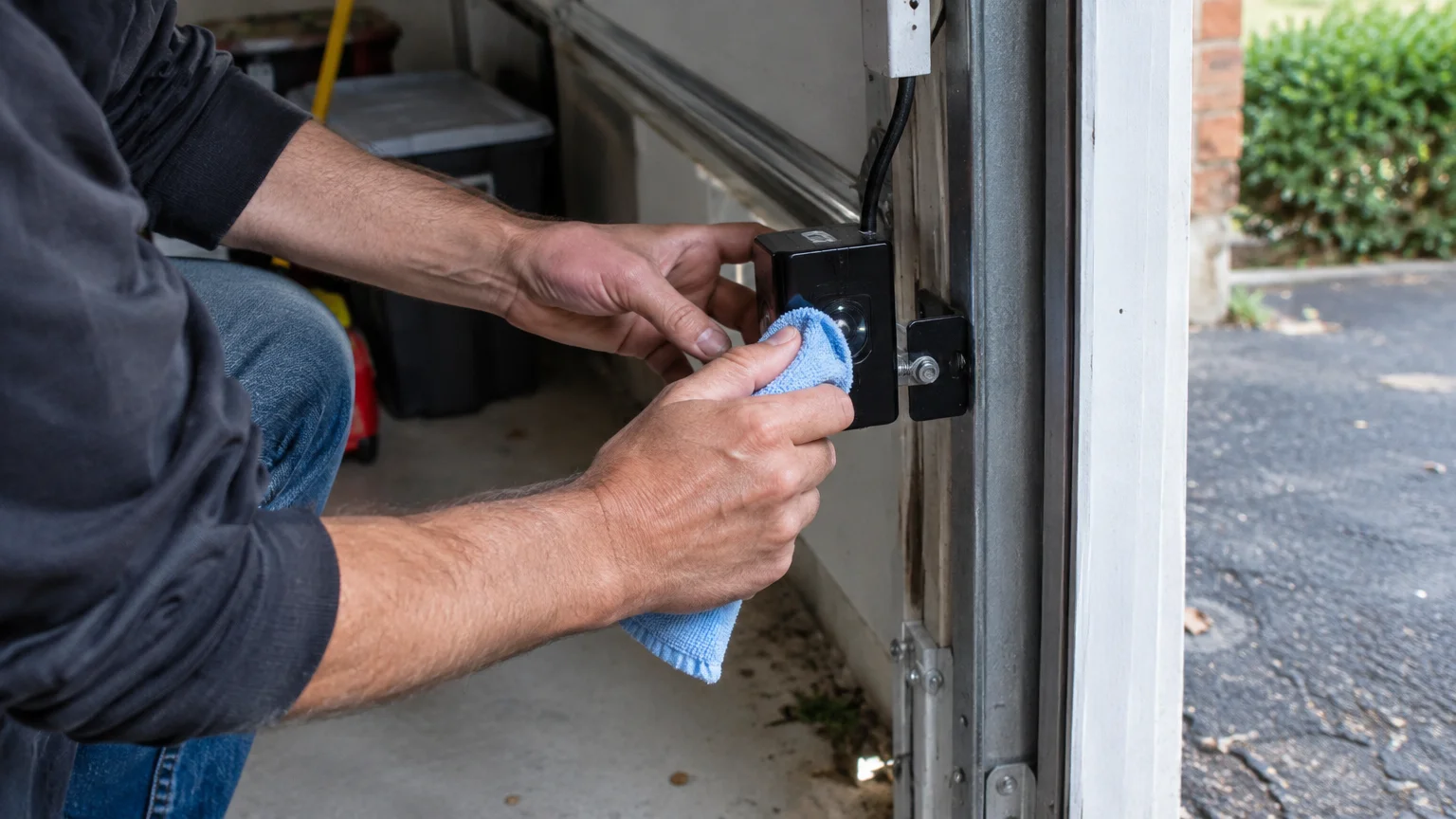
- Wipe each lens gently with a soft, dry cloth. Do not spray liquid into a sensor or tug on its wires.
Check alignment and test safely
- Look at the sensors from the front. They should face each other and sit at a similar height. If one looks bent, loose, or broken, do not force it into place.
- If a sensor has turned slightly and its bracket is sound, you may gently nudge it until the lights show the pattern in the opener manual. Do not loosen brackets or change wiring.
- Test the door only when the area is clear. Follow the opener manual and watch from a safe place. Stop if the door reverses, stops, or moves in an unusual way.
These checks are a good first step in Faribault, but they cannot fix broken parts. You do not need a professional just to move an object or gently clean a lens. Do not adjust spring tension, lift cables, bottom brackets, or opener force settings. If cleaning and a careful look do not help, a technician can check the system without guesswork.
What else can stop a garage door from closing?
A blocked or misaligned sensor is only one reason a garage door may not close. An obstruction, wiring problem, opener setting, or mechanical fault can also stop or reverse it. How the door acts can offer clues, but it cannot prove the cause on its own.
First, look for items in the door’s path and dirt on the sensor lenses. Then notice what happens when the opener runs. A door that starts down and quickly reverses may have a sensor problem. A door that jerks, sags, grinds, or stops in the same spot may have a track or door problem.
A loose or damaged wire can interrupt the sensor signal. Do not touch bare wires or try to join them. The opener may also have a fault or need service. If its lights flash or it makes a strange sound, check the manual for what that signal may mean. Do not take the opener apart.
A door that is off track, uneven, or hard to move may have a mechanical problem. Do not try to lift or guide a heavy, crooked door back onto its track. Garage Door Off Track Repair and Garage Door Opener Repair may be the right kinds of help for these problems. A technician can check the door and opener as one system.
A damaged panel or loose cable also needs care. Panel work can affect the door’s balance, and cables can hold strong tension. Garage Door Cable Repair should be handled by a trained technician. If the door will not open or close, describe what it does instead of guessing which part needs replacing.
A garage door spring can also affect how the door moves. If a spring breaks, the door may feel very heavy or fail to lift. Do not touch the spring or try to move the door by hand. Spring work involves parts under strong force, so it needs the right tools and training. A garage door seal, by contrast, sits along the door’s edge and helps close the gap. It does not explain every door problem, so do not mistake a worn seal for a sensor fault.
When should you stop troubleshooting and call a garage door technician?
Stop troubleshooting if the door looks unstable, a part is damaged, or simple cleaning and visual checks do not help. A technician should check damaged wires, tracks, springs, lift cables, bottom brackets, and opener faults. These parts can move with great force or hold the door’s weight.
Do not touch a spring, cable, or bottom bracket. Do not try to repair a panel if the door is bent or under strain. Spring and cable work needs the right tools and training. A wrong move can cause severe injury or make the door fall. A technician can find the cause and plan a safe repair.
If the door is stuck open, keep people and pets away from the opening. Move a vehicle only if you can do so without going under an unstable door. Keep valuable items out of view if possible. Do not pull the door down by hand if it is crooked, heavy, or partly off its track.
If the door is stuck closed, do not force it open or keep pressing the opener. Repeated attempts can add strain or make a small fault worse. Use another safe way out of the building if one is available. When you ask for help, say whether the door is open, closed, crooked, or making a new sound.
For property owners and business owners, a door that will not secure an opening needs prompt attention. Faribault Garage Door Repair serves Faribault, Medford, Morristown, Northfield, Lonsdale, and nearby communities. A technician can assess a door that will not close safely. Choose professional help when the issue goes beyond cleaning and a simple visual check.
What should you remember when a garage door sensor fails?
A garage door sensor helps stop the door when something blocks its path. If the door will not close, keep the sensor working instead of trying to bypass it. Clear objects, gently clean the lenses, and check the opener manual for the light pattern. Stop if the door or any part looks damaged.
Key takeaways
- Safety sensors help protect people, pets, and property from a closing door.
- A blocked beam, dirty lens, or poor alignment can stop the door from closing.
- Sensor light patterns vary, so check the manual for your opener model.
- Do not handle springs, cables, bottom brackets, damaged wires, or a door that is off track.
- A door that still fails after simple checks needs a proper inspection.
Frequently Asked Questions
Can a garage door close if one safety sensor is not working?
Some openers may act in different ways when a sensor has a fault, but forcing the door to close is not safe. Do not disconnect or cover a sensor. Keep people and pets clear, check for a simple blockage, and ask a technician to inspect the system if the door still will not work.
Can the sensors stop a garage door from opening, too?
Sensors mainly help stop a door from closing onto something in its path. A door that will not open may have another problem, such as an opener fault, a power issue, or a mechanical fault. If the door is crooked or stuck, do not force it. Have the door checked.
Can a garage door be replaced without replacing the opener?
Sometimes an existing opener may work with a new door. It depends on the opener’s condition and whether it suits the new door. A technician can check the opener, safety features, and door setup together. Do not assume an old opener is safe or suitable without an inspection.
Why do garage door cables come loose?
A cable may come loose if the door is out of balance, a cable or drum is damaged, or another part fails. The cause may be hard to see, and the cable can hold strong tension. Do not handle it or try to put it back. Ask a technician to check the door.
Can a homeowner fix a garage door panel?
A small surface mark may not affect how the door works, but a bent or cracked panel can affect its balance and movement. Replacing a panel may also mean working near parts under tension. Do not remove a panel from a loaded door. Have a technician decide whether repair or replacement is safe.
Conclusion: A sensor warning is a reason to check for a clear, simple problem—not a reason to remove the safety system. If cleaning and a careful look do not restore normal operation, leave the door alone and get help.
If you are unsure what is wrong, it is safer to have the door checked before trying more. Contact us today through Get in touch to arrange help from Faribault Garage Door Repair.