Garage Door Maintenance in Faribault, MN
A garage door tune-up checks every part that moves or carries load, adjusts what has drifted, lubricates what should be lubricated, and tells you what's wearing before it breaks.
For a door in the Faribault area that's used every day, it's the cheapest point at which to deal with a tired spring or a fraying cable, because it happens on your schedule instead of the morning the door won't open.
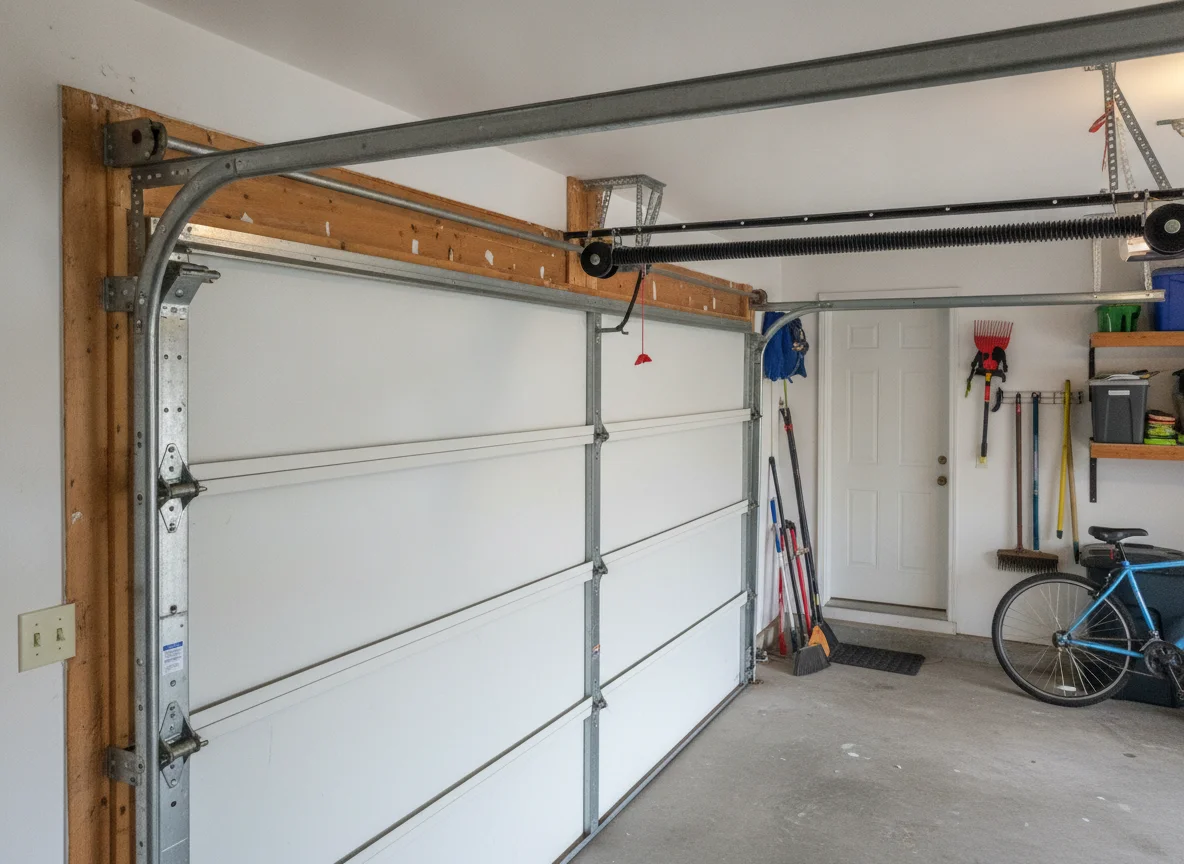
What a tune-up covers
Springs
Checked for gaps, stretching, rust and uneven wear, and the door tested for balance.
Cables
Checked for fraying and rust, especially at the bottom brackets, and for even tension on both sides.
Rollers and hinges
Worn, wobbling or cracked ones noted, and bearings and hinges lubricated.
Track
Checked for bends and loose brackets, cleaned, and checked for alignment.
Fasteners
Hinge, bracket and track bolts tightened. A door vibrates loose over thousands of cycles.
The opener
Drive chain or belt tension, travel limits, and close force adjusted.
Safety reversal
The door must reverse when the sensor beam is broken and when it meets an obstruction on the way down.
Bottom seal and weatherstripping, checked for gaps that let in water, cold and rodents.
You should come away knowing what's worn and why, so you can decide whether to deal with it now or keep an eye on it.
Door getting noisy, jerky or slow? Tell us what has changed and we'll take it from there.
Contact UsSigns it's time
The door is noisier than it used to be: grinding, squealing, or banging at the end of travel.
It moves in jerks or slows down partway.
It closes hard, or one side reaches the floor before the other.
The opener sounds like it's working harder than it did.
You can't remember when anyone last looked at it, and it's used every day.
Tell us what the door is doing
A sentence or two is plenty to start. You don't need to know the name of the part that's failed.
What you can do between visits
A few checks take minutes and catch problems early:
Look at the springs and cables once a month from the floor, with the door closed. You're looking for gaps in the coils and frayed strands. Don't touch either.
Test the reversal
Lay a roll of paper towels or a piece of lumber flat on the floor under the door and close it. The door should reverse on contact. If it doesn't, stop using the opener until it's adjusted.
Test the sensors
Wave something through the beam while the door closes. It should stop and go back up.
Lubricate the right places
Hinges, roller bearings and springs, with a spray made for garage doors. Not the tracks, which should be clean and dry, and not with grease, which collects grit.
Keep the tracks and the floor under the door clear, and in winter keep ice from freezing the bottom seal to the ground. Running the opener against a door frozen shut can tear the seal and strain the whole system.
How often
It depends on how hard the door works. A door that's the household's main way in and out, cycling many times a day, earns more attention than one opened on weekends. In towns with hard winters, a check before the first cold spell makes sense, since cold is when tired springs tend to go.
For most homes, once a year is a sensible rhythm, adjusted for how much the door is used.
What drives the cost of maintenance
Single or double door, and whether there's an opener to service as well.
Parts found worn during the visit: rollers, a bottom seal, hinges, or a cable nearing the end of its life. Ask for those to be quoted separately from the tune-up itself, so you can decide.
How far out of adjustment the door has drifted
A door that's been left for years takes longer to set right than one checked regularly.
When maintenance is the wrong call
A tune-up is for a door that works. If something has already broken, go straight to the right repair:
Common questions
Is a tune-up worth it on a newer door?
Yes, if it's used heavily. Springs and rollers wear by cycles, not by years, and a busy door can wear through them faster than its age suggests.
Will maintenance stop a spring from breaking?
Nothing makes a spring last forever. What a check does is spot one near the end of its life, so it can be replaced on a day that suits you instead of the day it snaps.
What lubricant should I use?
A spray lubricant made for garage doors, lithium- or silicone-based. Not household oil, and not heavy grease.
Other garage door services
Garage Door Spring Repair
Broken torsion or extension springs replaced with springs matched to your door's weight.
Read more →Garage Door Cable Repair
Frayed, snapped or slipped lift cables, and doors hanging crooked.
Read more →Garage Door Opener Repair
Openers that hum, reverse or won't respond, and new openers when repair isn't worth it.
Read more →Get in touch
Tell us how old the door and opener are, roughly how often the door is used, and anything it's started doing that it didn't used to, such as a new noise, a jerk, or a slow close.
If you're checking a door you've just inherited with a house, say so.