Garage Door Off Track Repair in Faribault, MN
A door that has come out of its track is supported, eased back in, and re-hung on straight track with sound rollers, and whatever knocked it out is fixed so it stays in.
If rollers on your garage door in the Faribault area have popped out of the track, the door is tilted or jammed, or a section is bowed where it caught, the door is off track. Stop using it and don't run the opener.
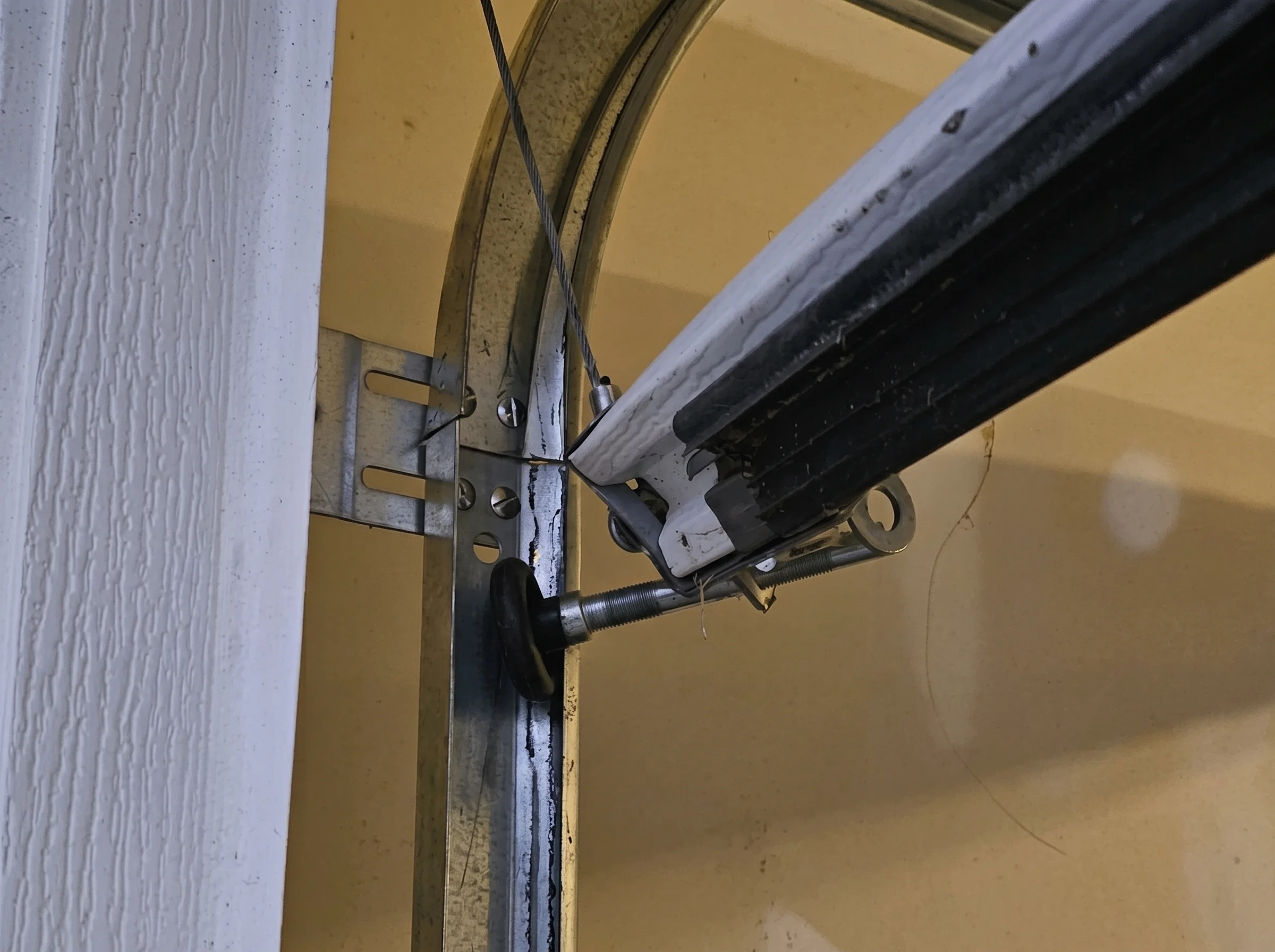
What an off-track door looks like
One or more rollers sitting outside the track, usually near the bottom of the door or at the curve where the track turns toward the ceiling.
The door tilted or wedged, often stuck partway open.
A section bowed or kinked where the opener kept pushing against a jammed door.
A track visibly bent, dented, or pulled away from the wall.
Grinding, popping or scraping as the door moves, just before it came out.
Door out of its track? Don't run the opener. Tell us which side came out and how it happened.
Contact UsWhy doors come off their tracks
A vehicle bump
Backing into a closed or half-open door is the most common cause, and it usually bends the bottom of the track as well.
A snapped or slipped cable
One side drops, the door twists, and rollers come out. If a cable is loose, the cable repair page covers that side of it.
Worn or broken rollers
A roller with a failed bearing drags instead of rolling, then jumps out at the first uneven spot.
Loose or bent track
Brackets that hold the track to the wall work loose over years of vibration, and the track spreads apart until rollers slip out.
Something in the door's path
A trash can, a bike or a mower caught under a closing door, especially with the opener's force set too high.
Make it safe
Don't run the opener
It will keep pushing and can bend sections or pull the track off the wall.
Don't pull the emergency release while the door is partly open and off track. The door can fall or swing loose of the track entirely.
Don't try to hammer rollers back in with the door under load. An off-track door is still carrying spring tension, and it can shift suddenly.
Keep clear of the door, and if a car is shut in, mention it when you get in touch.
What the repair involves
The door is secured so it can't fall or shift while it's being worked on, and spring tension is dealt with where needed.
The damage is assessed
Which rollers, how much track, whether any sections are bent, and whether a cable or spring started it.
Track is straightened or replaced
Minor bends can be trued; kinked or torn track sections are replaced.
Rollers are replaced where worn or broken, and hinges checked, since a cracked hinge will throw a roller again.
The door is re-hung in the tracks, the track brackets tightened, and the door run through full cycles on the opener. The opener's force and travel are rechecked afterwards.
Tell us what the door is doing
A sentence or two is plenty to start. You don't need to know the name of the part that's failed.
Rollers
Rollers are the part that decides how quietly and smoothly a door runs. They wear out long before the door does.
Steel rollers without bearings are the most basic. They're noisy, and they wear the track as well as themselves.
Nylon rollers with sealed bearings run far more quietly and need little or no lubrication.
Wobbling, flat spots, cracked wheels or seized bearings are signs a roller is due.
If your door is loud rather than broken, a roller replacement is often most of the fix, and it's usually done as part of a maintenance visit.
What drives the cost of off-track repair
How far out the door came
A couple of rollers at one corner, or a door hanging loose.
Track damage
Straightening versus replacing sections, one side or both.
Rollers and hinges that need replacing.
Bent or cracked door sections
A section that's bowed badly may need replacing, which can mean matching an older door's panel.
A cable or spring failure behind the derailment.
When a section can't be saved
A door that took a heavy hit can have sections too bent to straighten. A single section can often be replaced while the rest of the door is kept, as long as a matching section is still made.
When it isn't, or several sections are damaged, look at garage door installation for the replacement options.
Common questions
Can I push the rollers back into the track myself?
If a single roller has popped out at the bottom of a closed door, with no bent track and no loose cable, sometimes. Anything more than that, stop: the door is heavy, under spring tension, and liable to move when you don't expect it.
Why does my door keep coming off the same side?
Usually a track bent slightly out of line, a loose track bracket, or a cable on that side that's out of adjustment. Re-hanging the door without fixing the cause means it will come out again.
Should I lubricate the tracks?
No. Keep them clean and dry. Lubricant on the track collects grit. The rollers' bearings, hinges and springs are what take lubricant.
Other garage door services
Garage Door Cable Repair
Frayed, snapped or slipped lift cables, and doors hanging crooked.
Read more →Garage Door Spring Repair
Broken torsion or extension springs replaced with springs matched to your door's weight.
Read more →Garage Door Installation
New and replacement doors in steel, wood, composite or glass, measured to your opening.
Read more →Get in touch
Tell us where the door is stuck (closed, open, or partway), which side came out, whether anything hit it, and whether a cable looks loose.
A photo of each side of the door from a few feet back is the most useful thing you can send.