The best answer to how to replace garage door panel depends on the damage, door style, and available matching parts. One section can often be changed when the rest of the door is strong. A full replacement may be better when several sections, springs, tracks, or other parts are badly worn.
A damaged garage door can leave a home open, trap a car, or create a safety risk. A bent section may seem to mean the whole door needs replacement, but that is not always true. Faribault Garage Door Repair helps homeowners, business owners, and property owners compare a panel repair with a complete door replacement.
Table of Contents
- Can you replace just one garage door panel?
- How do you know whether a garage door panel is repairable or replaceable?
- How to replace a garage door panel safely
- Can a new garage door panel match the existing door?
- When is replacing the entire garage door better than replacing one panel?
- What else should be checked after a garage door panel is damaged?
- How can you choose the right solution for a damaged garage door?
- Frequently Asked Questions
Can you replace just one garage door panel?
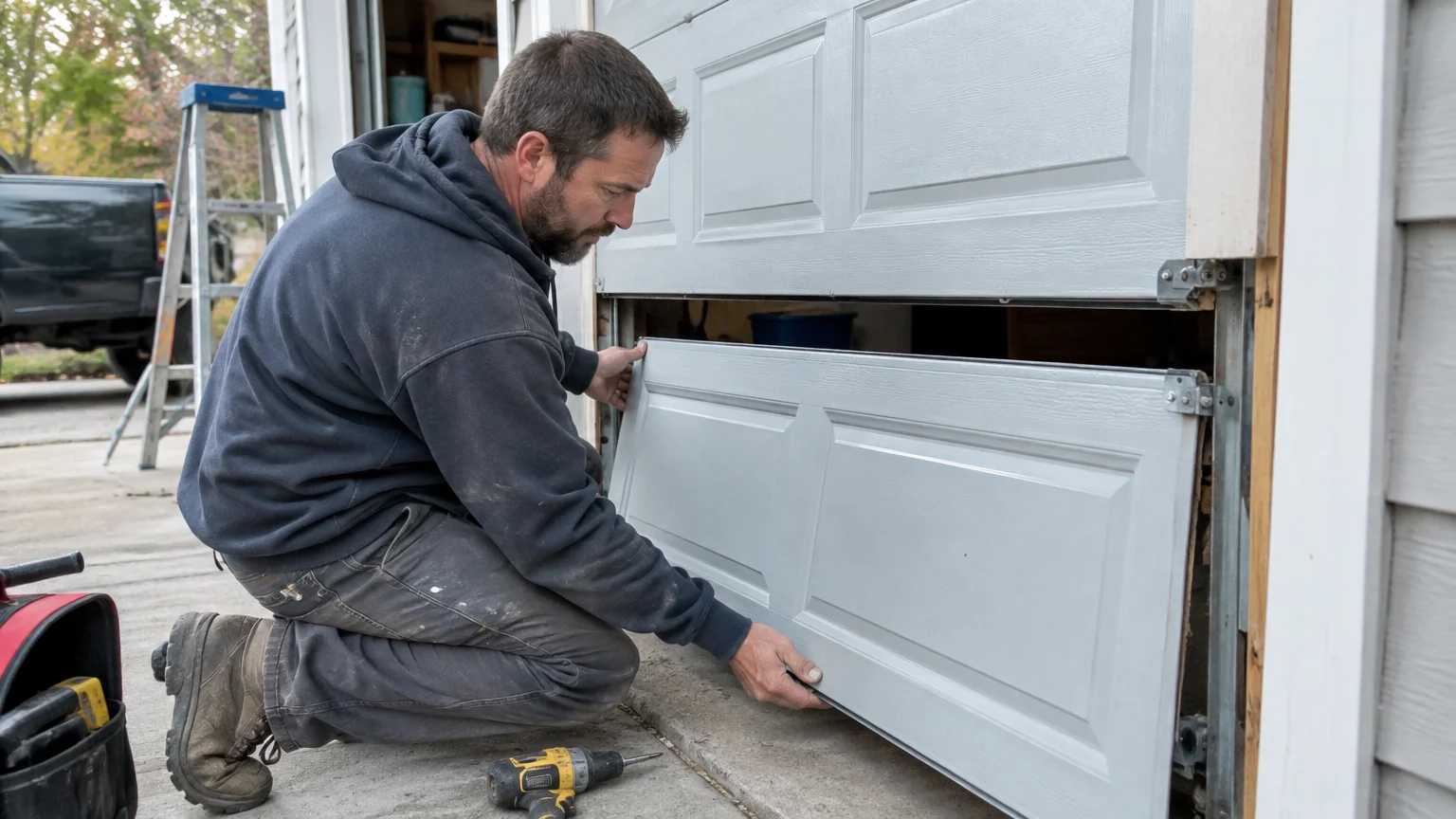
Yes, one garage door panel can often be replaced when the other sections are straight, strong, and suitable for continued use. The new section must have the right width, height, thickness, design, and hardware layout. A technician should also check that the new panel will move safely with the rest of the door.
When a single-panel replacement makes sense
A single-section repair may work after a vehicle hit, storm, or small accident. It may also be right when the damage affects only one panel and the door still opens smoothly. The tracks, rollers, hinges, springs, cables, and opener must also be in good working order.
A panel is easier to replace when the door is newer or the maker still produces the same section. An exact replacement can help keep the door balanced and maintain its original look. The choice also depends on windows, insulation, trim, and the way the damaged panel joins the other sections.
How matching affects the repair decision
A new panel may not look exactly like older sections. Sun, rain, dust, and cleaning can change the color over time. Small differences in finish or texture may be easy to see, even when the new panel uses the original color.
The door may also have a design that is no longer made. A close match may be available, but an exact match may not be. Faribault Garage Door Repair can help property owners review the door model and decide if one panel is a sound long-term choice.
How do you know whether a garage door panel is repairable or replaceable?
A panel may be repaired when the damage is small and the section remains strong. Replacement is more likely when the panel is crushed, split, badly bent, or no longer holds its hinges. A trained inspection can show whether the problem is only on the surface or affects safe operation.
Damage that may only need a repair
Small dents do not always affect how a panel moves. A technician may correct limited damage when the panel remains attached and does not rub against the tracks. A loose seal, trim piece, or small hardware problem may also be fixed without changing the whole section.
A homeowner can look at the closed door from a safe distance. Check for wide gaps, loose pieces, sharp edges, and a panel that pulls away. Do not force the door if it sticks, hangs unevenly, or makes a loud grinding sound.
Damage that usually calls for panel replacement
A panel often needs replacement when it is folded, cracked through, or pushed far out of shape. A damaged section can place extra strain on hinges, rollers, tracks, and the opener. Continued use may turn one damaged part into a larger repair problem.
Replacement is also more likely when the panel no longer joins the sections above or below it. Large gaps can let in water, cold air, and pests. For a business, a weak or open door can also affect security and daily access.
Do not pull, lift, or force a damaged panel by hand. Garage doors are heavy, and parts can move without warning. Garage Door Off Track Repair may be needed when an impact pushes rollers out of the tracks.
How to replace a garage door panel safely
How to replace garage door panel work is usually a professional job. It is not a simple home repair. The door must be held safely, the old section separated, and the new panel lined up with the tracks and hardware. The exact work depends on the door type and maker.
What the replacement process involves
A technician first checks the door and identifies the correct panel. The inspection also looks for damage hidden behind the section. The opener is made safe before the damaged panel is removed in a controlled way.
The new panel must line up with the sections above and below it. Hinges, rollers, brackets, seals, and other parts may need to be moved or changed. The technician then checks the door’s travel, balance, movement, and response before normal use resumes.
The work may reveal damage that was not visible at first. A bent track, broken hinge, loose roller, or damaged cable can stop the door from working safely. Changing only the visible panel may not fix the main problem.
Why panel replacement is usually not a DIY project
A homeowner does not need a professional for simple checks, cleaning, or safe upkeep. You can keep the door path clear, wipe dirt from photo-eye lenses, and look at the door while it is still. Do not adjust any part that holds stored force.
Torsion springs, extension springs, lift cables, and bottom brackets can hold dangerous force. These parts should not be removed, adjusted, or replaced without proper tools and training. A mistake can cause serious injury, damage the door, or make it fall without warning.
Do not lift a heavy damaged door, remove cables, or take apart spring hardware. A trained garage door repair professional can control these risks and find related faults before the door is used again. Garage door safety should come before a quick repair.
Can a new garage door panel match the existing door?
A new panel may match the existing door closely, but an exact visual match is not certain. Age, sunlight, weather, paint, texture, windows, and older designs all affect the result. The best match starts with the brand, model, measurements, and panel style.
Why age, color, and weathering matter
A new panel has a fresh finish. Older sections may have faded, darkened, or lost some surface texture. Even the same color can look different after years of sun and rain.
A close match may be suitable for a practical repair. Some owners may prefer a complete replacement when the door faces the street and appearance matters. Business owners may also consider how the door looks to customers, tenants, and visitors.
Windows and decorative features must match as well. A different window shape can make the door look uneven. The replacement must also have the right insulation thickness and connection points.
How short-panel and long-panel designs affect matching
Short-panel and long-panel doors use different layouts. A short-panel design has more, smaller sections across the door. A long-panel design has fewer, wider sections. The new section must match the layout, not only the overall door width.
Mixing these designs can make the door look uneven. It may also stop the hinges from lining up correctly. A technician can identify the pattern and check whether the needed panel is still made. Photos, model labels, and measurements can help, but they do not replace an in-person check.
When is replacing the entire garage door better than replacing one panel?
Replacing the full garage door may be better when several sections are damaged, the door is badly worn, or a matching panel cannot be found. It may also make sense when the hardware has had many faults. The best choice depends on safety, condition, fit, appearance, and future use.
Signs the door has reached the end of its service life
A full replacement deserves thought when the door has rust, cracks, sagging, repeated off-track problems, or wide wear. Frequent repairs may show that the door and its hardware no longer work together as one safe system. A damaged panel can reveal these older problems.
Other warning signs include loud movement, uneven travel, loose hinges, worn rollers, and a door that does not stay in place during a professional check. Broken springs and cables also need trained attention. Homeowners should never adjust these parts.
How insulation, style, and hardware influence the choice
A new door may provide better insulation, updated windows, stronger seals, and a different style. It may also work better with a newer opener and safety features. Still, a full replacement is not always needed after one impact.
The best choice compares every major part. An opener may need repair while the door remains sound. In other cases, a new door without suitable hardware can create new problems. Garage Door Installation can help when a complete change is the safer path.
The final recommendation should match the door’s condition and the owner’s goals. A panel repair is often the simpler option when the rest of the system remains reliable. A full replacement may be more practical when damage and age affect many parts. The final cost is confirmed on a quote after the door is checked.
What else should be checked after a garage door panel is damaged?
A damaged panel can hide trouble in the rest of the door. The tracks, rollers, hinges, brackets, springs, cables, and opener should be checked before regular use. The goal is safe movement, not only a better-looking panel.
Tracks, rollers, hinges, and brackets
An impact can bend a vertical track or push a roller out of place. A broken hinge can make sections separate or bind during movement. Loose brackets can also change how the door carries its weight.
A homeowner can look for bent metal, loose parts, and rollers outside the track. Do not straighten tracks, remove hinges, or move the door with force. Garage Door Off Track Repair may be needed when rollers no longer sit safely in the track.
Cleaning the area around the door is safe upkeep. Keep toys, tools, dirt, and stored items away from the door’s path. Keep people and pets clear while the door moves.
Springs, cables, and opener alignment
Springs and cables help lift and control the door. They hold stored force and can cause severe injury when handled without training. A technician should inspect them after an impact, especially when the door feels heavy, crooked, or hard to move.
The opener also needs attention after a panel change. Its arm, sensors, travel, and door connection must work together. A damaged door can make the opener strain, stop early, or reverse at the wrong time. Garage Door Opener Repair may be needed when the opener no longer moves the door correctly.
Stop using the door if it falls, jams, reverses without reason, or makes a sharp popping sound. Prompt help can protect people, cars, and the building.
How can you choose the right solution for a damaged garage door?
The right choice starts with a safety check and a full look at the door. Ask whether the damage is limited, whether a matching panel is available, and whether the hardware remains reliable. A written quote should confirm the work and final cost before work begins.
Questions to ask before approving panel replacement
A homeowner or property manager should ask:
- Is the damaged panel the only part that needs attention?
- Can the new panel match the design, windows, finish, and insulation?
- Are the tracks, rollers, hinges, brackets, springs, and cables safe?
- Will the opener need testing, adjustment, or repair?
- Would a complete door replacement make more sense for this door?
These questions can prevent a cosmetic repair from hiding a safety fault. They also help owners compare a short-term repair with a longer-term choice. Faribault Garage Door Repair can help Faribault homeowners, businesses, and property owners understand the options instead of guessing from visible damage.
Key takeaways for restoring safe, reliable operation
- One panel can often be replaced when the rest of the door is sound.
- A close color match may not be exact on an older door.
- Short-panel and long-panel designs need careful review before matching.
- Springs, cables, bottom brackets, and loaded hardware need trained service.
- A full door replacement may be better when damage affects many parts.
Frequently Asked Questions
Can garage door panels be replaced individually?
Yes. Many sectional garage doors allow one damaged panel to be replaced. The new section must match the door’s size, design, thickness, windows, and hinge layout. A technician should inspect the full door because an impact can also damage tracks, rollers, cables, brackets, or the opener.
How long does a replacement garage door panel last?
A replacement panel can last for many years when it fits the door and the hardware stays in good condition. Its life depends on weather, use, care, installation quality, and impact risk. A new panel cannot correct a worn track, weak spring, or damaged opener.
Can a homeowner replace a garage door panel?
A homeowner can safely inspect the closed door, clear its path, and clean photo-eye lenses. Panel removal is usually not a safe DIY task. The door is heavy, and springs, cables, brackets, and hinges may hold stored force. Trained service is the safer choice for replacement work.
Is it better to replace the whole garage door after an impact?
Not always. One-panel replacement may suit a door that remains straight, safe, and supported by available parts. A full replacement may be better when several sections are damaged, the door is old and worn, or no close match exists.
Who repairs garage doors near me?
Local garage door repair companies may handle damaged panels, off-track doors, rollers, hinges, cables, and openers. Choose a provider that explains safety risks, checks the full system, and confirms the recommended work in a quote. Faribault Garage Door Repair serves Faribault, including Medford, Morristown, Northfield, Lonsdale, and nearby communities. The team can help with urgent garage door concerns.
Conclusion
One damaged panel does not always mean the entire garage door needs replacement. The best choice depends on the panel’s condition, the door’s age, the available match, and the health of the tracks and hardware. Homeowners can make safe visual checks, but panel removal and loaded hardware work should be left to trained professionals.
When a door is stuck, unsafe, or leaving a home or business exposed, act quickly. Contact us today to discuss the safest garage door solution.